

Tokyo Tales. Article 18
First published in the UK in September 2008
Sushi, Sashimi, and More
It’s a common misconception in Britain that sushi is raw fish. In fact, sushi is the name given to anything served on, or in, a block of vinegared rice.
Admittedly, that rice is often topped with raw fish, but various other items, cooked or otherwise are also included. Some sushi bars here definitely cater to the Western taste and incorporate sushi topped with Spam®!
Sashimi
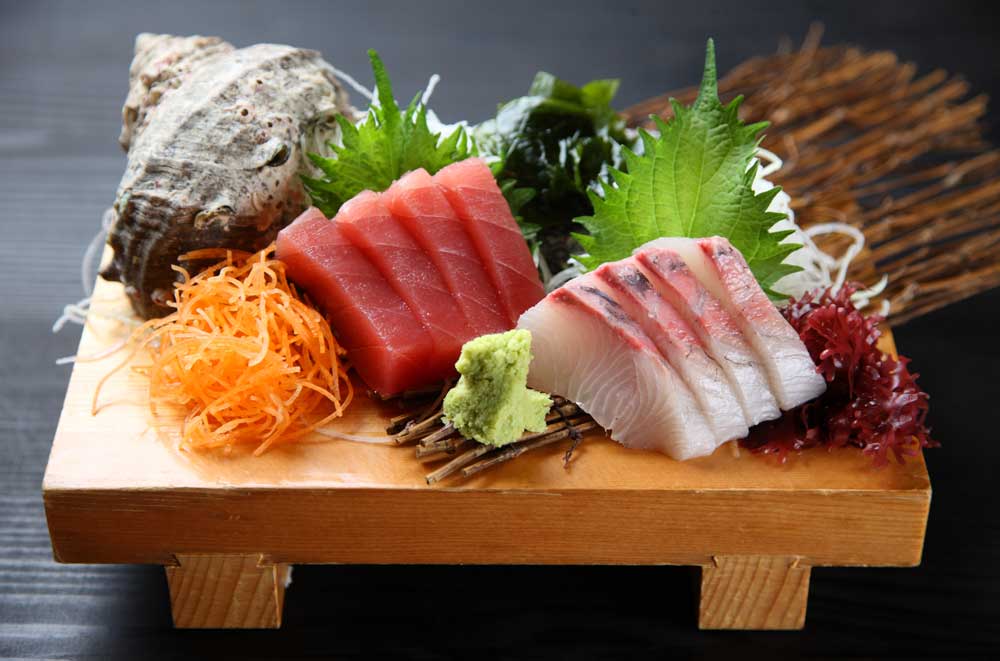
Sashimi is the name for slices of raw fresh fish and is a dish in its own right. It’s often a starter to a more substantial meal or served in dedicated sashimi restaurants. The word literally means ‘pierced body’ and as Japan is surrounded by oceans containing a bounty of species you can have a wide variety of the freshest fish in the world. Sashimi doesn’t just mean raw fish, and includes shellfish and other seafood, too; although octopus is always cooked.
Another sashimi item is basashi, thinly sliced raw horse meat.
Sushi
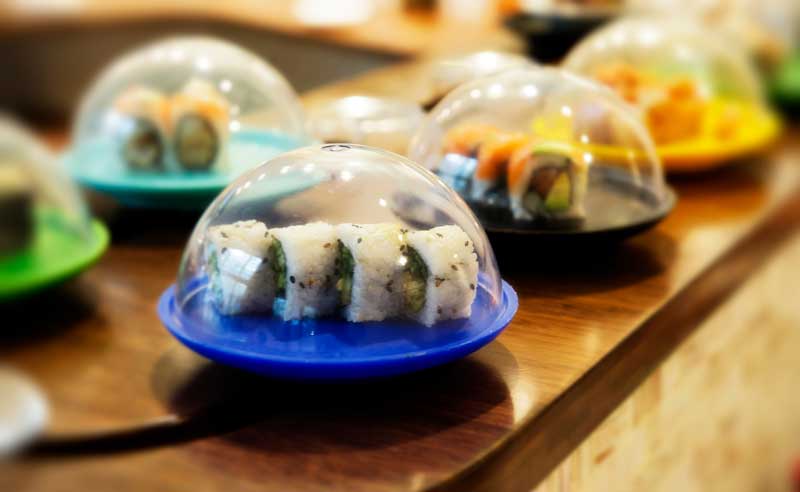 Many people are familiar with the concept of the sushi conveyor belt, where fresh sushi is made behind the counter by specialist chefs, in full view of the customer. You sit around the bar, make endless cups of free green tea using built-in hot water taps and choose your dish as it passes you on the conveyor belt. The sushi chef will make anything to order so if there’s something you want but it’s not on the conveyor belt, just ask.
You start with the more subtle flavours of lighter, white fish and move on to darker fish with stronger tastes. The meal ends with a slice of sweet omelette called tamago-yaki and often a creamy dessert, as well.
Condiments include soy sauce in which to dip your sushi, wasabi, the dangerously hot, green Japanese horseradish, grated ginger, and slices of pink, vinegared ginger to be eaten between dishes in order to cleanse the palate. Also included is grated daikon, a giant white radish, which is rather tasteless but is said to aid digestion. However, I have been told that daikon kills any parasites that might be in the sashimi.
The plates are colour coded depending on the price of the sushi, so you stack your used plates and when you’ve finished your meal, take them to the checkout near the door. You are charged by the number of used plates.
This is an extremely cheap way of grabbing an easy, healthy and fascinating lunch. A friend and I spent well over an hour at a local sushi bar building up a huge stack of plates between us and our meal came to less than £5 for both of us.
Fish well-known to us Brits include tuna, salmon, and prawns. Shellfish such as scallop are delicious. Less familiar, yet quite obvious, are octopus tentacles, melt-in-the-mouth squid slices, or fish roe. Salmon roe is particularly beautiful to look at being large and glistening red.

Unfamiliar items such as the deep orange uni, sea urchin eggs, can prove a bit of a shock to the taste buds, especially once you find out what you’ve just eaten, but are considered a special treat here. Other unfamiliar fish are well worth trying, horse mackerel, abalone, Monkfish liver, and freshwater eel.
Ikizukuri
Some foods are not for the faint hearted though. Although I can happily eat fresh sashimi, there is an aspect of Japanese cuisine I never intend to try, as the fish is a little too fresh for my taste.
It’s called ikizukuri which means ‘prepared alive’. The meal begins by selecting your dish from the fish-tank, but the highly trained chef doesn’t kill the creature (crustacean, octopus, or fish) before filleting and gutting it. It’s then served to you, prettily rearranged, but still moving and the heart still beating. Apparently, it’s a masterpiece and a demonstration of the highest skills of a sashimi chef.
Other items I will be avoiding are odorigui. Odori means ‘dancing’. Tiny fish are served in a stock and swallowed whole, while ebi odori are dancing prawns… Also popular are live baby octopus. Also, nope.
Sometimes, I do miss British food. Enjoy your deep-fried fish and chips!